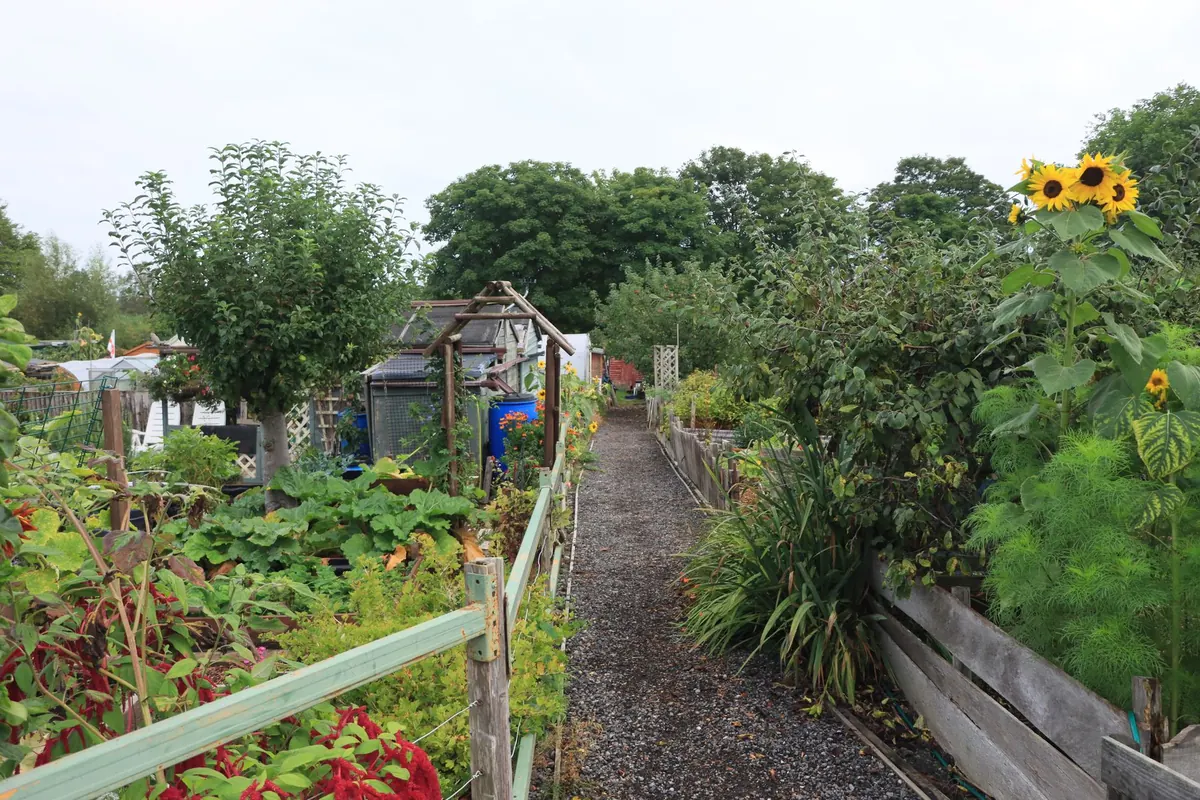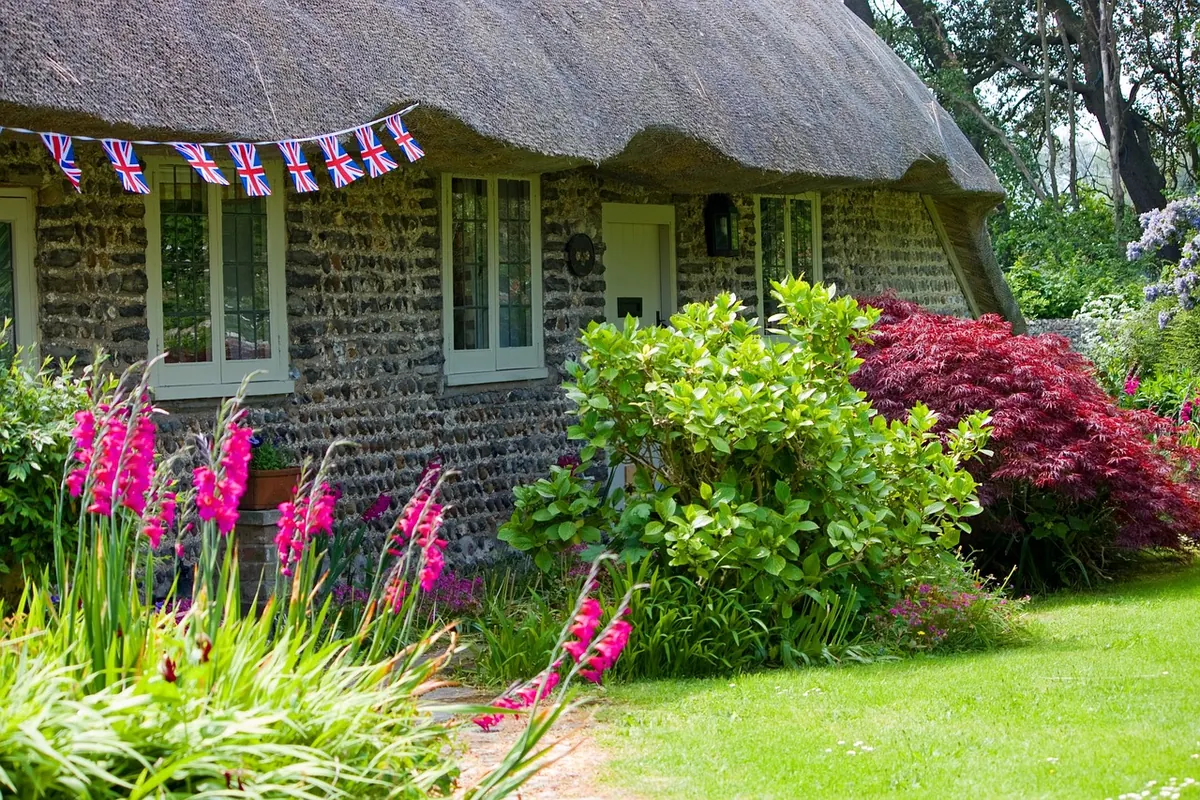
Kent has been growing cottage gardens for longer than most of us have been gardening. The style grew out of small plots beside cottages, where flowers were pushed in among the vegetables, seed was saved, and nothing was left bare for long. That looseness is the point. You do not need an orchard or a flint wall to get the feeling; you need plants that enjoy Kent's conditions, arranged so a modest backyard reads as generous rather than cramped.
What Makes a Garden Feel Kentish
Forget the postcard version. The gardens that look most convincingly Kentish share habits rather than a plant list. They are packed — no bare soil, no neat gaps between plants. They mix flowers with herbs, fruit and vegetables instead of giving each its own bed. They let a few things self-seed: foxgloves in the gravel, aquilegia in a paving crack, Welsh poppies along a wall. And they lean on the local palette of materials — ragstone, brick, peg tiles, weatherboard, old terracotta, a weathered bench.
Get three of those right and the garden will read as Kentish even if you are starting with a rectangle of paving behind a modern house.
Read Your Plot First
Before buying anything, spend a week watching the space. Note where sun falls at 9am, 1pm and 5pm, and where the ground stays wet. Kent's soils vary over short distances: chalk across much of the North Downs, heavy clay through the Weald, lighter sandy ground in places along the coast. Each behaves differently, and a plant that sulks in one will romp in another.
A squeeze test tells you plenty. Take a handful of damp soil and press it into a ball. Clay holds together and feels slick; chalk or sand crumbles; good loam holds but breaks apart with a nudge. On clay, add compost and grit and plant in spring rather than in wet winter. On chalk, improve the top few inches with well-rotted organic matter and choose plants that tolerate lime — most cottage classics do.
Then look up. A south-facing wall creates a microclimate far kinder than the middle of the yard; dry shade under a fence is the hardest spot you own, so do not waste your best plants there.
Perennials That Earn Their Space
In a small garden every plant has to work harder, so forget anything that flowers for a fortnight and then leaves a hole. The backbone of a Kentish border is a handful of long-flowering perennials, repeated in twos and threes rather than dotted about singly — that repetition is what makes a small space feel designed.
- Hardy geraniums — 'Rozanne' flowers for months, and smaller forms knit around neighbouring plants without smothering them.
- Catmint (Nepeta) — grey-green, soft, endlessly popular with bees. Cut it back after the first flush for a second.
- Alchemilla mollis — chartreuse froth that looks well in gravel and seeds itself politely.
- Astrantia and hardy salvias — good in part shade and along a path; both give flowers you can cut.
- Verbena bonariensis — airy stems that add height without weight, ideal where a solid shrub would block light.
- Foxgloves and hollyhocks — short-lived, but they fill gaps for free once established.
- Pinks and sweet William — old favourites that suit lighter, free-draining ground.
Add bulbs underneath: snowdrops, crocus and narcissi push through the perennials in spring while the border is still bare.
Roses and Scented Shrubs
One rose does more for the mood of a cottage garden than ten other plants. In a small yard, choose a repeat-flowering shrub rose with good scent and let it be the anchor, underplanted with catmint, geraniums and alchemilla rather than bare soil. Give it room to breathe and decent air movement to reduce blackspot.
Scent carries across a small garden better than colour does, so a scented shrub earns its keep: philadelphus for June, or rosemary trained against a wall.
Herbs for the Kitchen and the Bees
Herbs are the quickest way to make a garden look settled, and the most useful plants you can grow in a few square metres. Lavender, rosemary, thyme, sage and winter savory want sun and sharp drainage, so plant them near a wall or in a raised bed with grit mixed in. Marjoram, chives, parsley and fennel are happy in ordinary soil but dislike drying out completely. Mint is the exception to every rule: keep it in a pot or it will colonise the bed within two seasons.
Run a row of pots along the sunny side of a path, or fill the front of a border where you can reach them. Cut regularly — thyme and sage grow bushier if you trim them, and chives and parsley keep producing for months.
Climbers: The Small-Garden Trick
Walls and fences are the only real estate a small
Photo: No-longer-here / Pixabay